DeFi pulse is a legacy Ethereum DeFi data brand tied to TVL rankings and the DPI index
In short: Ethereum DeFi analytics dashboard tracking protocol TVL, with DeFi Pulse Index coverage for comparing token basket exposure.
Defi pulse is a legacy Ethereum DeFi data brand best known for popularizing total value locked rankings across lending markets, decentralized exchanges, derivatives platforms, and asset management protocols. It also became closely associated with the DeFi Pulse Index, commonly called DPI, an Ethereum index token created to give holders broad exposure to major decentralized finance governance tokens through a single basket.
That combination explains why people search the name for two related reasons. Some want the old analytics view: protocol rankings, TVL movement, and category-level comparisons across Ethereum finance applications. Others want context on DPI, the index token that packaged several DeFi assets into one ERC-20 position. The search intent is part data dashboard, part market reference, and part history of how DeFi measurement became easier to read.
The TVL dashboard that made Ethereum DeFi easier to compare
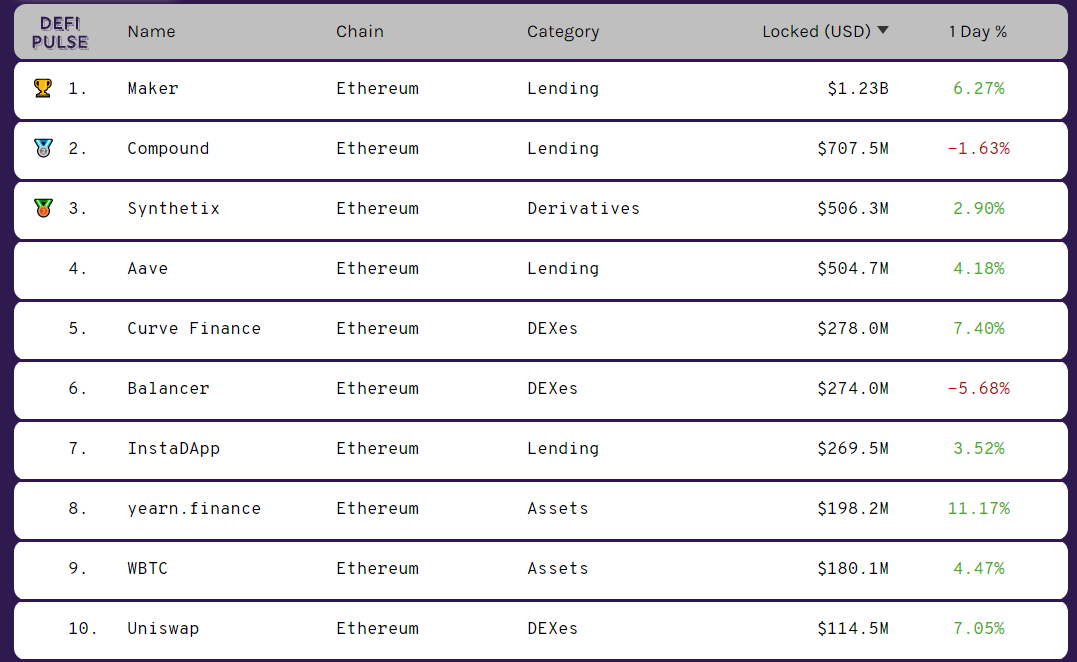
Total value locked became one of the first simple yardsticks for measuring DeFi traction. It counts the crypto assets deposited into a protocol's smart contracts, commonly including collateral in lending markets, liquidity in automated market makers, staked assets, and strategy vault balances. Defi pulse helped make TVL a familiar headline metric during the early growth of Ethereum DeFi, when protocols such as Maker, Compound, Aave, Uniswap, Synthetix, Curve, and Yearn drew attention from users and analysts.
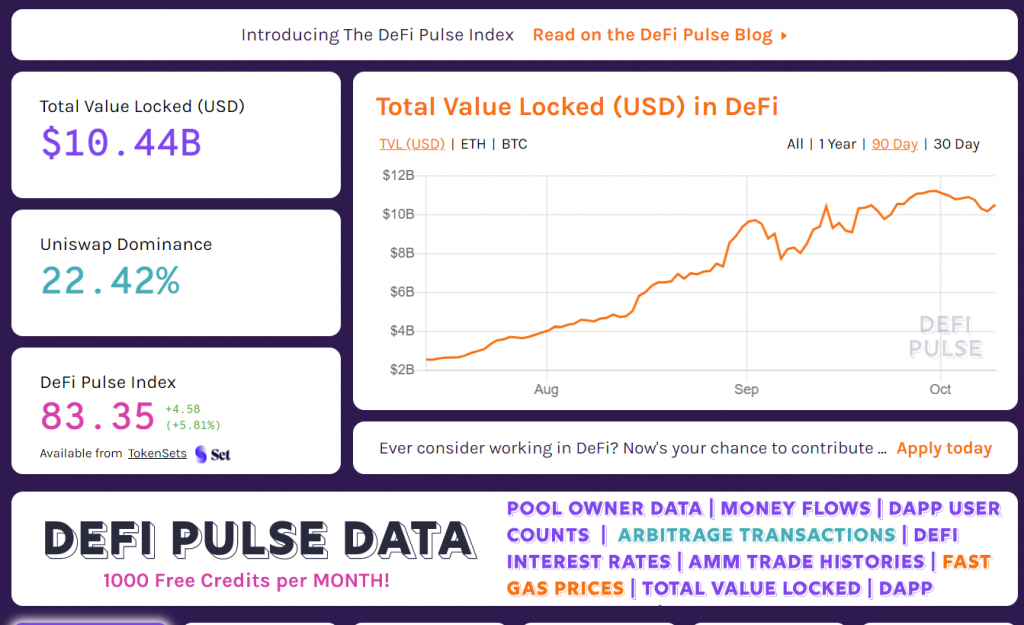
The metric mattered because DeFi applications do not have branches, balance sheets, or account totals that look like traditional financial companies. A smart contract system is easier to inspect by looking at on-chain deposits, collateral backing loans, liquidity available for swaps, and withdrawals over time. TVL gave readers a fast way to see where capital was concentrated and which protocol categories were growing.
How TVL tracking worked across lending, swaps, and vaults
The analytics model behind a TVL ranking starts with protocol contracts on Ethereum. Each market has a different accounting structure. Maker tracks collateral locked against DAI debt, Aave and Compound track supplied assets and borrowed balances, Uniswap and Curve track liquidity pool reserves, and Yearn tracks assets deposited into strategy vaults. A dashboard normalizes those balances into a common currency view so readers can compare unlike systems side by side.
That normalization is useful, but it also creates interpretation work. ETH, stablecoins, wrapped Bitcoin, governance tokens, and liquidity provider tokens move in price throughout the day. A protocol's TVL rises when users add capital, when token prices rise, or both. It falls when withdrawals happen, collateral is liquidated, yields shrink, token prices decline, or a strategy migrates to another contract. Reading TVL well means separating asset-price movement from genuine user deposit behavior.
DPI turned DeFi attention into a single Ethereum token
The DeFi Pulse Index, or DPI, is the other major reason the name remains searchable. DPI is an ERC-20 index token associated with Index Coop and the DeFi Pulse brand. Rather than buying several DeFi governance tokens one by one, a user could hold a single token designed to represent a basket of established DeFi projects.
The basket approach appealed to people who wanted thematic exposure to decentralized finance without manually sizing every component. Index products also made DeFi easier to plug into wallets, portfolio trackers, decentralized exchanges, and lending or collateral workflows where supported. DPI did not remove market risk; it changed the packaging from individual token selection into index exposure.
What a user actually checks before using DPI
A practical DPI review starts with the current composition, because an index token is only as clear as the assets inside it. Users look at component tokens, weighting rules, rebalancing policy, liquidity depth, on-chain contract address, trading venue support, and whether the token trades close to the value of the underlying basket. Those details determine whether the product fits a portfolio, a swap route, or a longer-term DeFi allocation.
- Composition: which DeFi governance tokens sit inside the index.
- Weights: how heavily each component influences price movement.
- Rebalances: when the basket updates and how changes are executed.
- Liquidity: whether trades clear with acceptable slippage.
- Custody path: whether the user holds DPI directly in a self-custody wallet or through another interface.
Defi pulse as a search term therefore leads to both market data and index mechanics. Someone studying DPI should treat the token as a structured crypto asset, not as a live TVL ranking. The dashboard concept and the index product are connected by DeFi market coverage, but they answer different user questions.
Where the analytics view still helps new DeFi research
Even when a specific dashboard is no longer the main place users check every market, the analytical habit it taught remains valuable. Start with the category: lending, exchange liquidity, derivatives, stablecoins, liquid staking, bridges, yield vaults, or asset management. Then inspect the protocol's assets, chain support, contract maturity, oracle design, governance process, and withdrawal assumptions.
Day to day, Defi pulse helped establish the idea that DeFi should be compared with transparent, on-chain measures rather than only token prices. That distinction still matters. A token chart shows what buyers and sellers paid for governance exposure. A deposit chart shows how much capital users placed into contracts. Revenue, fees, active loans, swap volume, and liquidations add further context. No single metric gives the whole picture, but TVL remains a useful first layer.
Getting from a search result to a useful DeFi decision
A user arriving from a search for Defi pulse should first decide which task they are trying to complete. If the goal is protocol research, compare multiple data sources and focus on current TVL, category, chain, and risk indicators. If the goal is DPI, open the token in a wallet or trading interface only after confirming the exact ERC-20 asset and its current index composition.
Wallet setup is straightforward for Ethereum users: hold ETH for gas, use a reputable wallet, and preview the transaction before signing. Index tokens trade through decentralized exchanges and some crypto interfaces, but execution quality depends on liquidity at the time of the swap. Price impact, approval prompts, and token address accuracy deserve attention because index products share the same self-custody responsibilities as other ERC-20 assets.
Benefits that made the name stick
The strongest benefit of the original analytics idea was readability. DeFi was difficult to follow when each protocol published its own interface, token, accounting terms, and risk language. Ranking markets by TVL created a common table for discussion. It helped users see whether capital was flowing into lending, decentralized exchanges, synthetic assets, or yield aggregators.
DPI added a second benefit: convenience. A basket token reduces the operational load of buying, rebalancing, and tracking several DeFi tokens separately. It also creates a cleaner portfolio line item for users who want exposure to the sector rather than a concentrated bet on one protocol. Defi pulse became memorable because the name linked DeFi measurement with a recognizable index product.
The risks behind TVL numbers and index exposure
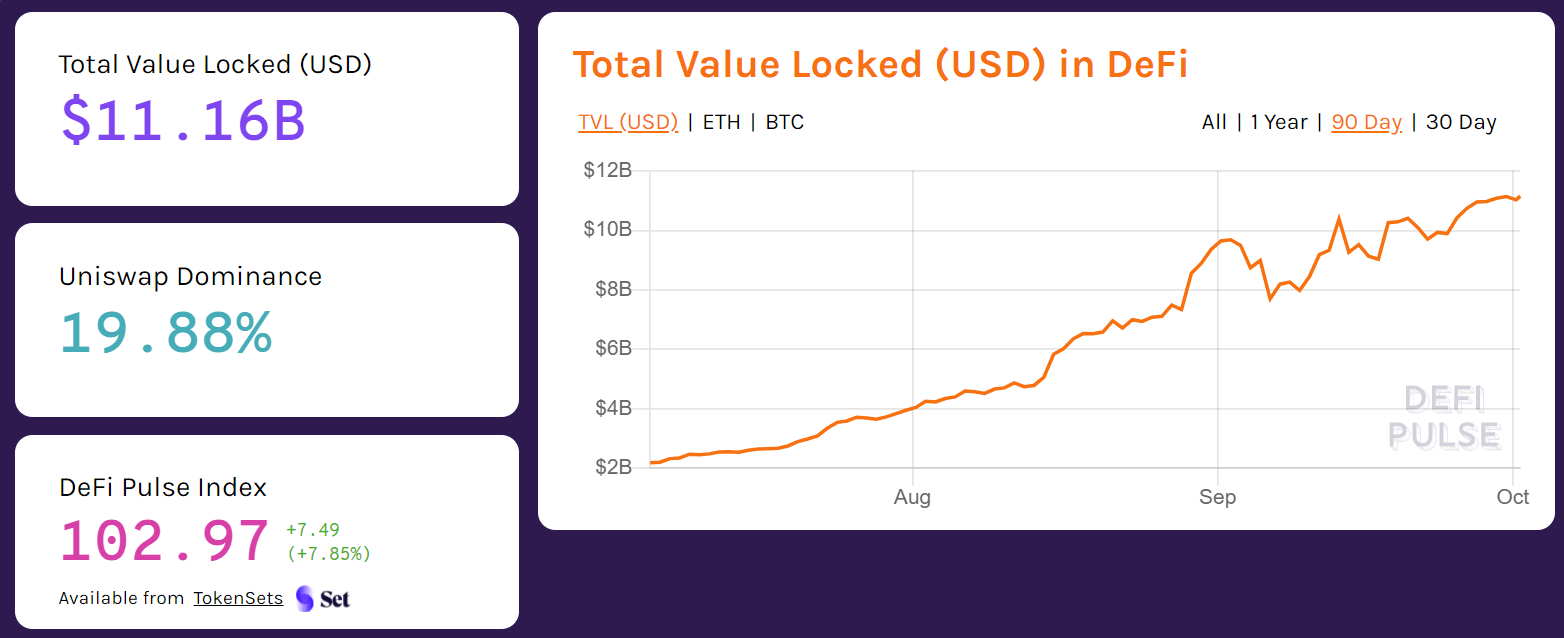
TVL can overstate the health of a protocol when incentives temporarily attract deposits, when the same capital is counted across layered positions, or when a token rally inflates dollar value without new users entering. It can also understate activity for protocols that generate high volume with less deposited capital. The number is useful when it starts a deeper review, not when it replaces one.
DPI carries the risks of its components and the risks of the index structure. DeFi governance tokens react to protocol revenue, emissions, regulation concerns, smart contract incidents, liquidity cycles, and broad crypto market conditions. Rebalancing rules improve discipline, but they do not protect the basket from sector-wide drawdowns. The specific caution is simple: confirm current composition before treating the token as representative of today's DeFi market.
DeFiLlama, Token Terminal, Dune, and other research paths
Modern DeFi research rarely stops with one dashboard. DeFiLlama is widely used for TVL across many chains and protocol categories. Token Terminal emphasizes fees, revenue, and financial-style metrics. Dune gives analysts customizable on-chain queries and community dashboards. Etherscan provides contract-level inspection, holder data, and transaction history for Ethereum assets. Together, those tools create a richer picture than a single ranking page.
Importantly, Defi pulse still has value as a recognizable reference point in DeFi history and as a search path into DPI. For current work, the most useful approach is to separate the two meanings: use TVL analytics to study protocol adoption, and use index-token research to understand DPI exposure. That distinction keeps the name useful without confusing a dashboard habit with an investment product.
Defi pulse - common questions
Is DPI the same thing as a DeFi TVL dashboard?
No. DPI is an Ethereum ERC-20 index token that represents a basket of DeFi governance tokens. A TVL dashboard is a data view that ranks protocols by assets deposited into smart contracts. The two are related through DeFi market coverage, but they serve different jobs: DPI packages token exposure, while TVL analytics helps compare protocol deposits and category growth.
What fees matter when buying the DeFi Pulse Index token?
The main costs are Ethereum gas, decentralized exchange trading fees, and price impact from the liquidity pool or route used for the swap. A user also needs to account for any product-level costs embedded in the index methodology. The visible quote in a wallet or swap interface should be checked against expected output before signing the transaction.
Can I hold DPI in a regular Ethereum wallet?
Yes. DPI is an ERC-20 token, so it fits standard Ethereum self-custody wallets that support custom tokens and Ethereum mainnet assets. The wallet must hold enough ETH to pay gas when sending, swapping, or approving token interactions. If the token does not appear automatically, adding the correct contract address in the wallet interface displays the balance.
Which alternatives help research Ethereum DeFi today?
DeFiLlama is the common starting point for current TVL across protocols and chains. Token Terminal adds fee, revenue, and valuation-style metrics. Dune is useful for custom dashboards built from on-chain data. Etherscan helps inspect Ethereum contracts and token transfers directly. These tools complement the older Defi pulse research habit by adding broader coverage and deeper transaction-level context.
Does a high TVL mean a DeFi protocol is safer?
High TVL shows that a large amount of capital sits in a protocol's contracts, but it does not prove safety. Security depends on contract design, audits, oracle setup, governance controls, liquidity depth, and incident history. TVL is best read as an adoption and liquidity signal. It should be paired with contract research and risk review before interacting with a protocol.
When does TVL move without new users depositing funds?
TVL moves when the market price of deposited assets changes. If ETH, wrapped Bitcoin, stablecoin balances, or governance tokens inside a protocol rise in dollar value, displayed TVL rises even with no new deposits. It also falls when asset prices decline. That is why analysts compare TVL with token prices, transaction counts, volume, and user activity.