DeFi pulse is a DPI market-pulse view of Ethereum DeFi exposure
In short: DeFi index market pulse tracking DPI token exposure across protocol categories, liquidity moves, and allocation changes for sector snapshots.
Defi pulse is a focused way to read the DeFi Pulse Index, known by the ticker DPI, as a sector snapshot rather than a single-token chart. It follows how an ERC-20 basket of major Ethereum DeFi governance tokens reflects lending, decentralized exchange, synthetic asset, derivatives, and yield infrastructure demand across the broader protocol economy.
The useful angle is not simply whether DPI is up or down. A real pulse asks which protocol categories are carrying the basket, which tokens are losing weight, how Ethereum liquidity conditions shape trading, and whether total value locked across major applications supports the story shown by the index. That makes the page relevant to readers who want a DeFi sector read without opening every protocol dashboard one by one.
DPI turns protocol tokens into one DeFi sector signal
The DeFi Pulse Index is an Ethereum index token associated with Index Coop and the DeFi Pulse brand. It represents a basket of established DeFi assets rather than a claim on protocol deposits. Its holdings have centered on governance and utility tokens from recognizable DeFi systems, including names such as Uniswap, Aave, Maker, Synthetix, Compound, Curve, Yearn, and other qualifying assets as the methodology changes through rebalances.
That distinction matters. Protocol TVL measures assets deposited in smart contracts, while DPI measures market exposure to tokens linked to those protocols. When lending markets gain deposits, DEX volume expands, and governance tokens attract buyers, the index captures part of that sector movement through token prices and allocations. Defi pulse reads those signals together instead of treating DPI as an isolated ticker.
What the pulse reveals beyond the DPI price
A price chart answers one question: what happened to the token. A market pulse answers a better question: what drove the movement. DPI rises when the weighted basket appreciates, but the reason might be broad Ethereum strength, a rally in DEX tokens, renewed lending demand, or a rotation into older DeFi governance assets after speculative capital leaves newer narratives.
The most useful readings combine several layers:
- DPI price direction and volume across liquid Ethereum markets.
- Weight changes after index rebalances and methodology updates.
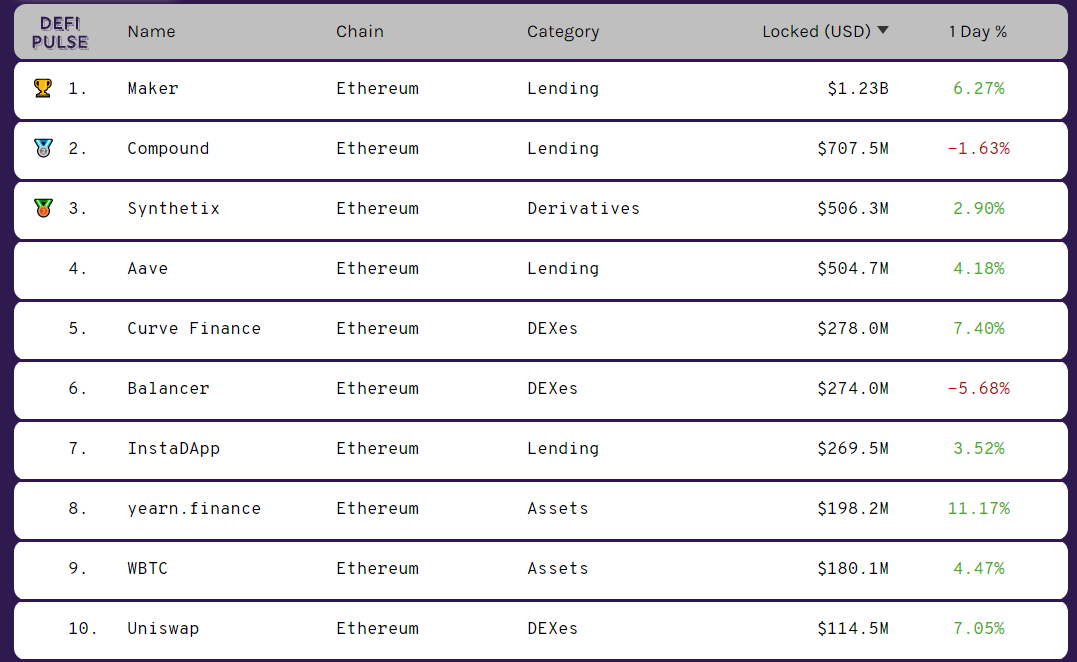
- TVL movement in major lending, exchange, and asset-management protocols.
- Liquidity depth for the token on decentralized exchanges and aggregators.
- ETH market structure, because most DeFi collateral and trading activity still ties back to Ethereum.
Viewed this way, Defi pulse becomes a sector lens. It does not replace protocol research, but it narrows the first pass by showing whether DeFi majors move together or split by category.
How Ethereum TVL connects to DPI exposure
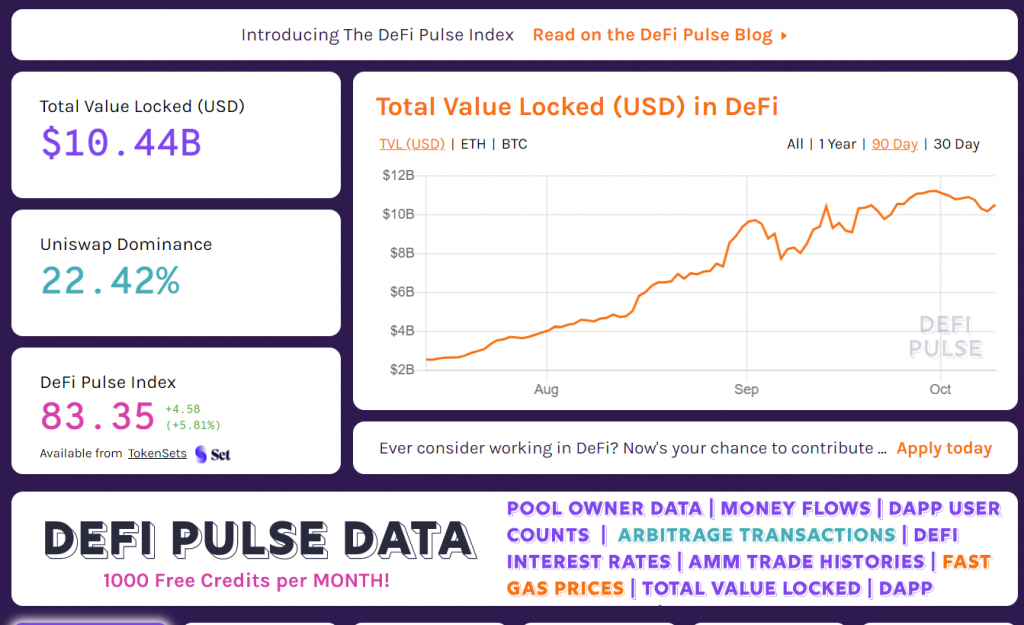
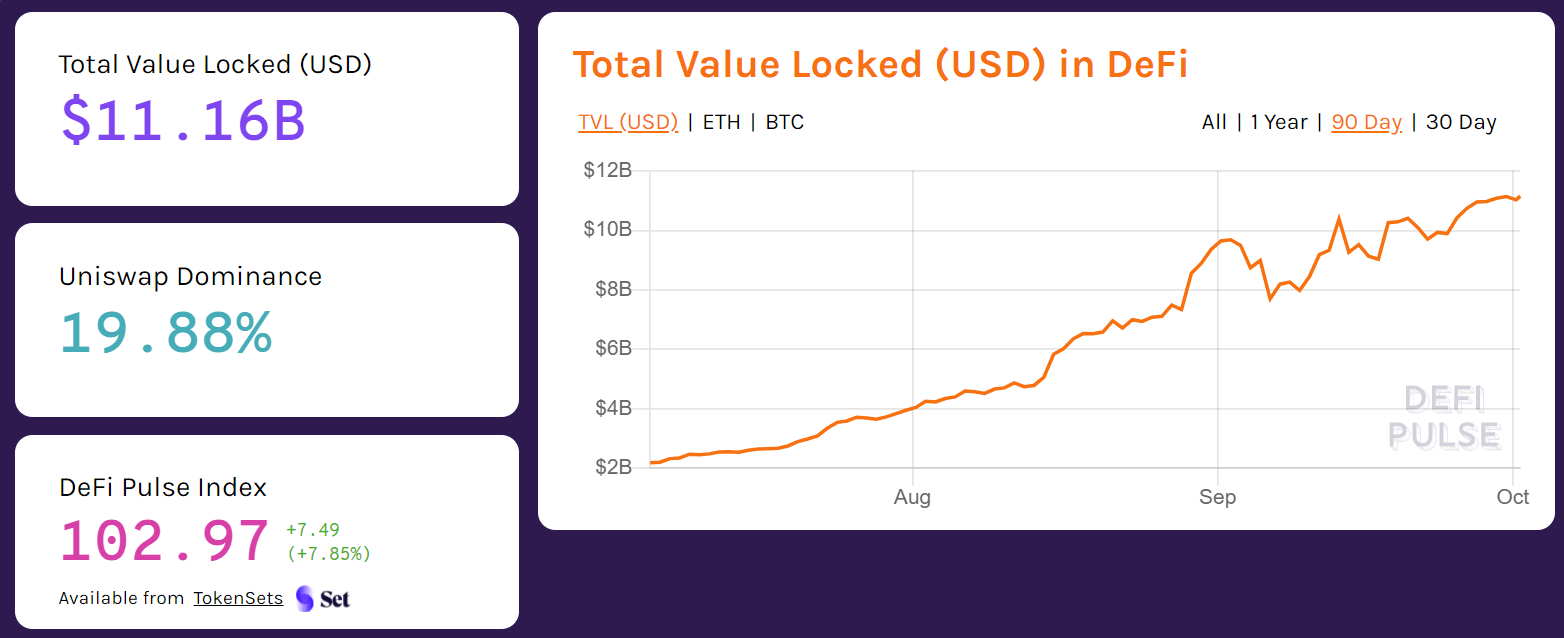
Total value locked is one of the oldest public metrics in DeFi. It tracks the value of assets deposited in protocol contracts, including lending pools, liquidity pools, collateral vaults, staking derivatives, bridges, and yield vaults. DPI does not hold those deposits. It holds tokens whose market value reflects expectations around the protocols and categories behind them.
That creates a useful, imperfect relationship. When Ethereum lending TVL expands and borrow demand improves, tokens tied to credit markets receive more attention. When decentralized exchange volume climbs, exchange tokens and liquidity infrastructure names become more important to the narrative. When TVL rises only because ETH itself has rallied, the signal is weaker; the dollar value of deposits increases even if user activity stays flat.
A strong Defi pulse reading separates token appreciation from real usage. The cleanest setup is a mix of higher protocol deposits, stronger fee generation, deeper trading liquidity, and price strength across multiple DPI constituents.
Rebalances decide which protocols speak louder
DPI is an index, so methodology and rebalancing matter. Index rules determine which assets qualify, how concentrated the basket becomes, and when allocations adjust. A token with a larger weight influences the index more than a smaller holding, even if the smaller protocol is growing faster. This is why a pulse view pays attention to composition, not just headline performance.
Rebalances also change the meaning of historical comparisons. A past DPI move might have been led by lending tokens, while a later move might be driven by DEX governance assets or liquid staking-related infrastructure if those assets qualify. Defi pulse treats the basket as a changing map of DeFi majors, so allocation context sits beside every performance read.
Liquidity and slippage shape the real DPI experience
DPI trades as an ERC-20 token, so the practical experience depends on wallet support, market depth, gas costs, and available routes through Ethereum liquidity venues. Large trades need deeper pools and better routing because index tokens still face slippage when order size overwhelms available liquidity. During periods of high Ethereum activity, gas costs also affect smaller entries and exits.
The trading workflow is straightforward: connect a self-custody Ethereum wallet, choose a reputable swap interface or portfolio tool that supports DPI, inspect the route, review the estimated network fee, and confirm the transaction. Custody, approvals, and network fees remain part of the experience because the token lives on-chain. A user watching Defi pulse should read liquidity changes as part of the signal, not as an afterthought.
Where DPI fits beside Aave, Uniswap, and Maker positions
Holding one DeFi governance token concentrates exposure around a single protocol, its community, its fee model, and its specific risks. DPI spreads exposure across several large DeFi names in one token. That broad basket makes it useful for a sector view, while individual positions remain better suited to a specific conviction about Aave lending markets, Uniswap exchange volume, Maker collateral demand, or another protocol-level thesis.
This is also where the pulse angle helps. If DPI rises while only one constituent rallies, the move is narrow. If Aave, Uniswap, Maker, Compound, Curve, and related assets all strengthen together while Ethereum DeFi TVL expands, the sector signal is broader. Defi pulse is strongest when it identifies that breadth before the chart alone makes the move obvious.
Reading category rotation inside the basket
DeFi is not one uniform market. Lending, DEXs, derivatives, stablecoin infrastructure, synthetic assets, and vault strategies respond to different catalysts. A fall in borrow rates affects lending sentiment. A surge in on-chain trading affects exchange tokens. Stablecoin supply growth affects collateral systems and liquidity venues. DPI compresses all of that into a single token, but the underlying category rotation still matters.
A useful reading groups constituents by role and asks which side is doing the work. If exchange tokens lead while lending tokens lag, the market is rewarding trading activity. If credit protocols and collateral systems strengthen together, the market is rewarding balance-sheet demand. If older governance tokens lag while newer narratives outperform outside the basket, the index signals that capital has moved beyond the classic Ethereum DeFi set.
Benefits and risks of using an index pulse
An index pulse saves time because it condenses many protocol signals into one watchlist. It also reduces single-protocol concentration compared with holding only one DeFi token. DPI is transparent enough for users to inspect holdings, observe rebalances, and compare the basket against Ethereum, Bitcoin, and major DeFi category benchmarks.
The main risk is false simplicity. A single index chart hides smart contract exposure, liquidity constraints, governance-token volatility, methodology changes, and the gap between token prices and protocol fundamentals. Defi pulse works best as a dashboard for questions, not a command to trade. If the basket moves sharply, the next step is to inspect the constituents and the Ethereum activity behind the move.
Alternatives for a wider DeFi market read
DPI is one route into DeFi sector exposure, but it is not the only lens. A user comparing approaches looks at direct holdings in AAVE, UNI, MKR, COMP, CRV, SNX, or YFI; broad crypto market benchmarks; protocol revenue dashboards; and TVL trackers that break activity down by chain and application. Each approach answers a different question.
Direct tokens deliver stronger protocol-specific upside and stronger protocol-specific downside. TVL dashboards explain usage but do not equal investable exposure. Revenue and fee data show business activity, but they require interpretation across incentives and token economics. Defi pulse sits between those views by connecting an investable Ethereum index token with the protocol categories that shaped classic DeFi market structure.
Questions people ask about Defi pulse
What does DPI exposure mean in a DeFi market pulse?
DPI exposure means the market value and allocation weight tied to each token inside the DeFi Pulse Index basket. The exposure is not a deposit into the underlying protocols. It is token-based participation in a group of Ethereum DeFi assets, so the pulse reading focuses on constituent prices, index weights, liquidity, and category movement across lending, exchange, collateral, and yield-related protocols.
Does higher Ethereum TVL automatically make DPI go up?
Higher Ethereum TVL does not automatically lift DPI. TVL measures deposited assets in protocol contracts, while DPI tracks the market price of tokens in an index basket. The strongest relationship appears when higher TVL comes with stronger fees, more borrowing, deeper exchange volume, and rising demand for the basket's constituents. If TVL rises only because ETH is worth more, the signal is weaker.
Which wallet setup is needed to track or trade the DPI token?
A standard Ethereum self-custody wallet that supports ERC-20 tokens is enough to hold DPI. Trading also requires ETH for gas and access to a swap interface, exchange, or portfolio tool that lists the token. The important details are the selected network, token contract accuracy inside the wallet interface, the quoted route, and the approval requested before the transaction is signed.
Why can DPI move differently from major DeFi protocol TVL?
DPI moves differently from TVL because governance-token prices reflect expectations, liquidity, market risk appetite, and index weights. A protocol's deposits might grow while its token lags because emissions, governance concerns, fee capture, or broader market weakness outweigh usage growth. The reverse also happens when traders buy a sector narrative before deposits or revenue data confirm the move.
When do DPI rebalances matter most for pulse readings?
Rebalances matter most when a constituent gains or loses meaningful weight, an asset enters or leaves the basket, or one category becomes much more influential than before. After a rebalance, the same price move can carry a different message because the basket's sensitivity has changed. A pulse reading should always treat current allocation as the active map, not a fixed historical mix.
Can DPI replace researching individual DeFi protocols?
DPI gives a broad sector signal, but it does not replace protocol-level research. The index compresses several assets into one token, so it hides differences in fee models, governance quality, smart contract exposure, liquidity incentives, and product traction. It is useful for spotting sector breadth, then drilling into the specific holdings that explain the move.